


The Furness Line
The Furness Line is a railway linking Lancaster to Barrow-in-Furness. Rich industrialists paid for the Furness Line railway to be built in the 1850s. They wanted easy access to the mineral wealth of South Cumbria.
Before the railway, people had to either sail around Morecambe Bay when the tide was in, or negotiate their way across its treacherous sands by foot at low tide. The railway’s impressive engineering connected the once-isolated places of Morecambe Bay.
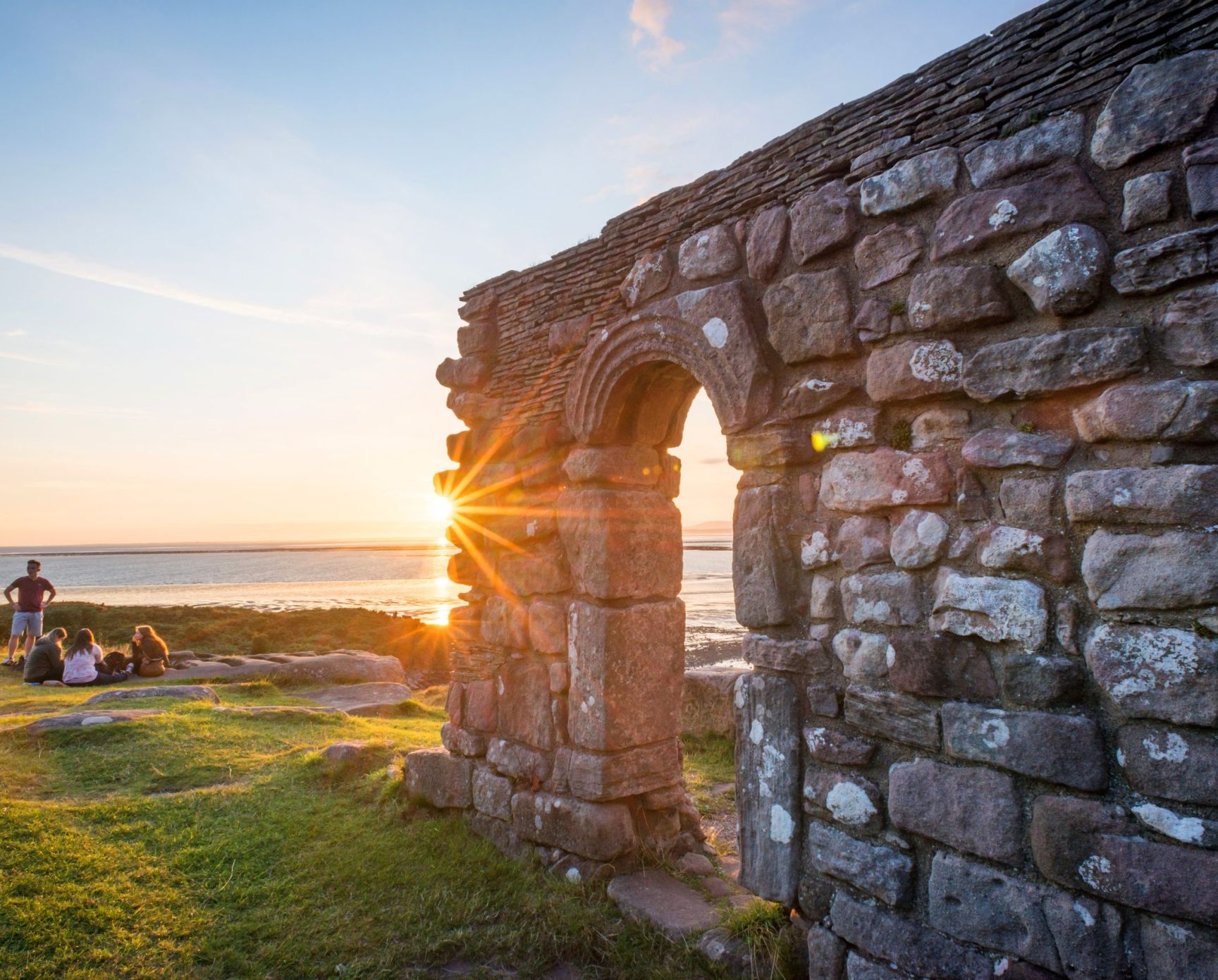
Today, the route still offers one of the most efficient ways to travel around and explore the Bay. As the route hugs the coastline, much of the journey offers spectacular seascape views of the Bay and its tidal sands.
Viking Morecambe Bay
Ancient Birkrigg
Unique Fishing Heritage
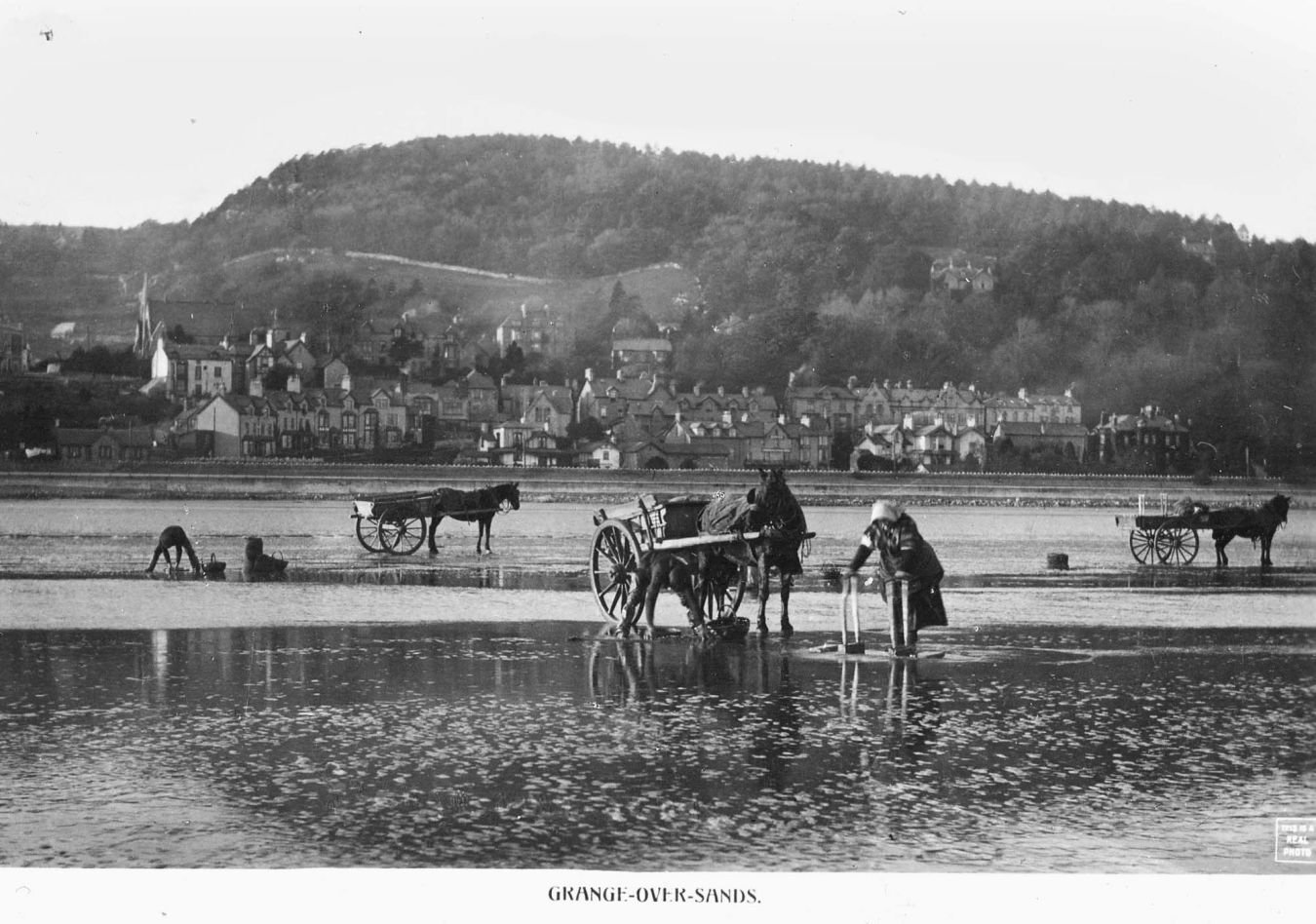
The Bay has been fished by generations – the mudflats and waters are rich in the Bay’s famous shrimps, cockles, mussels and flatfish.
Unlike other areas of the coast, fishing in Morecambe Bay was done on foot, later using horse and cart to cross the sands (up until the 1960s even), and later still by tractor and in fewer cases, by boat.
The dramatic tides, mudflats and shallow nature of Morecambe Bay meant fishing practices had to adapt around the Bay itself.
Female Lighthouse Keepers
Morecambe Bay has a proud history of female lighthouses keepers.
In the 20th century, Janet Raby and then Beatrice Parkinson were keepers of Plover Scar lighthouse near Cockerham.
Ella Swarbrick was Assistant Keeper at Walney lighthouse and her sister Margaret (Peg) Braithwaite became the Principle Keeper.